How the Pool Works

Three risks that aren't timed together. One pool that's stronger for holding all three.

The FMIP, EMIP and GPMIP aren't three separate pools. Rather, they are three ways into one mutual pool, with one balance sheet and one class of dividend share. Seed founders bring the upside: the rare power-law winners that drive long-run returns. Employees at Series B to E companies and GPs' carry in late-stage winners bring the steadiness: fewer failures, earlier exits, and premiums that arrive on schedule. By blending, the pool needs about a third of the worst-case cash it would need if it were run as three, and it grows larger than the three would be combined: a quintessential win:win.

Not a New Idea

The oldest idea in insurance.

We're students of history. And that's why there is nothing new about Rising Tide's pool, other than what it insures. The idea underneath it, that unlike risks are cheaper to carry together than apart, has made the unaffordable affordable for centuries. And pooling isn't only defensive: owned by its members, a pool can raise their upside too.

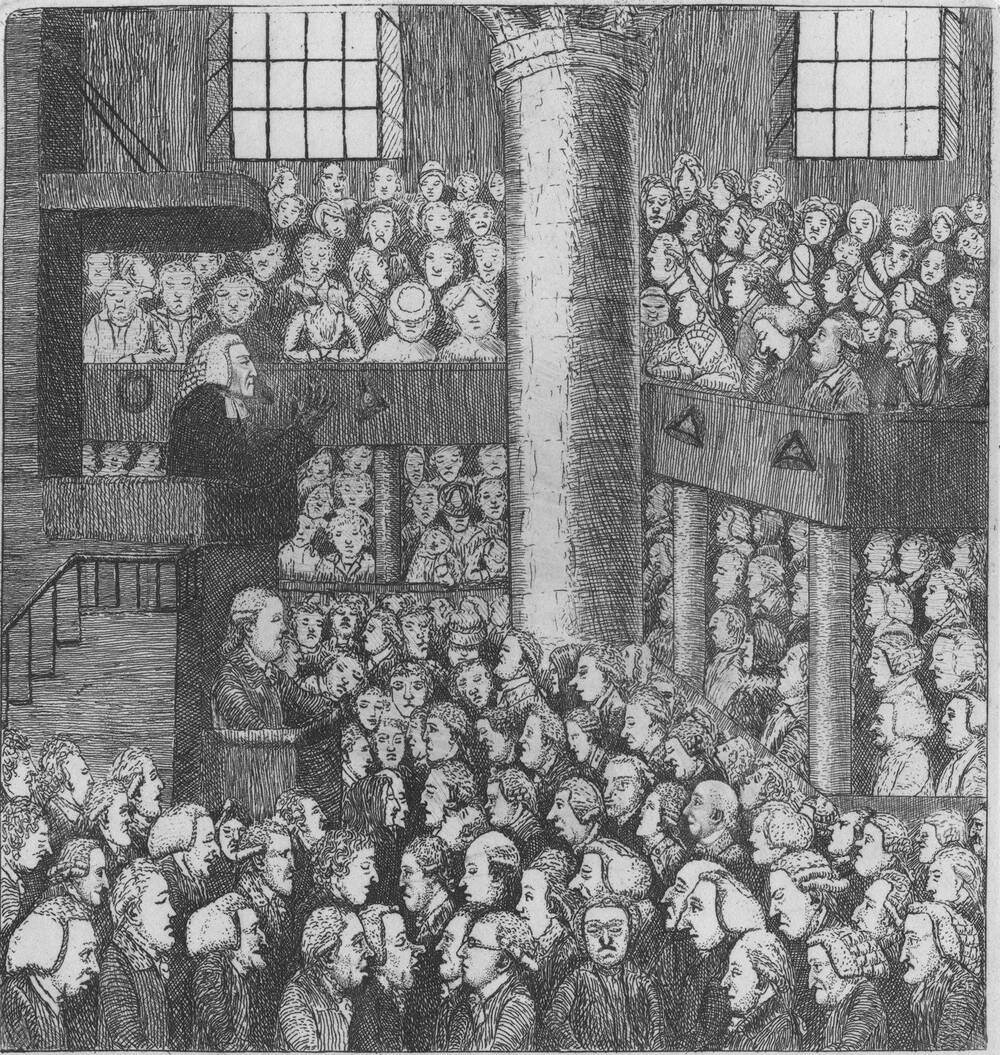
Etching of Rev. Dr Alexander Webster preaching from the pulpit to a crowded congregation in the Tolbooth Church, Edinburgh
John Kay, Rev. Dr Alexander Webster preaching in the Tolbooth Church, Edinburgh, 1785. Public domain.
1744 · Edinburgh
The Scottish Ministers' Widows' Fund

When a Church of Scotland minister died, his widow and children were often left with almost nothing. Two Edinburgh ministers, Robert Wallace and Alexander Webster, proposed that every minister pay a modest annual premium into one fund that would pay a pension to any widow it left behind. Webster collected data on ministers' deaths and the families they left; Wallace priced the premiums from a life table; the mathematician Colin Maclaurin checked their sums.

The premiums were invested rather than simply passed through, and the fund worked. By one well-known account, its founders' forecast of its capital in 1765 was out by a single pound.1 It was still paying out two and a half centuries later.

The lesson for usNo single minister could promise his widow a pension. Hundreds of them, pooled and priced on real data, could. And it's survived 250 years of crises.
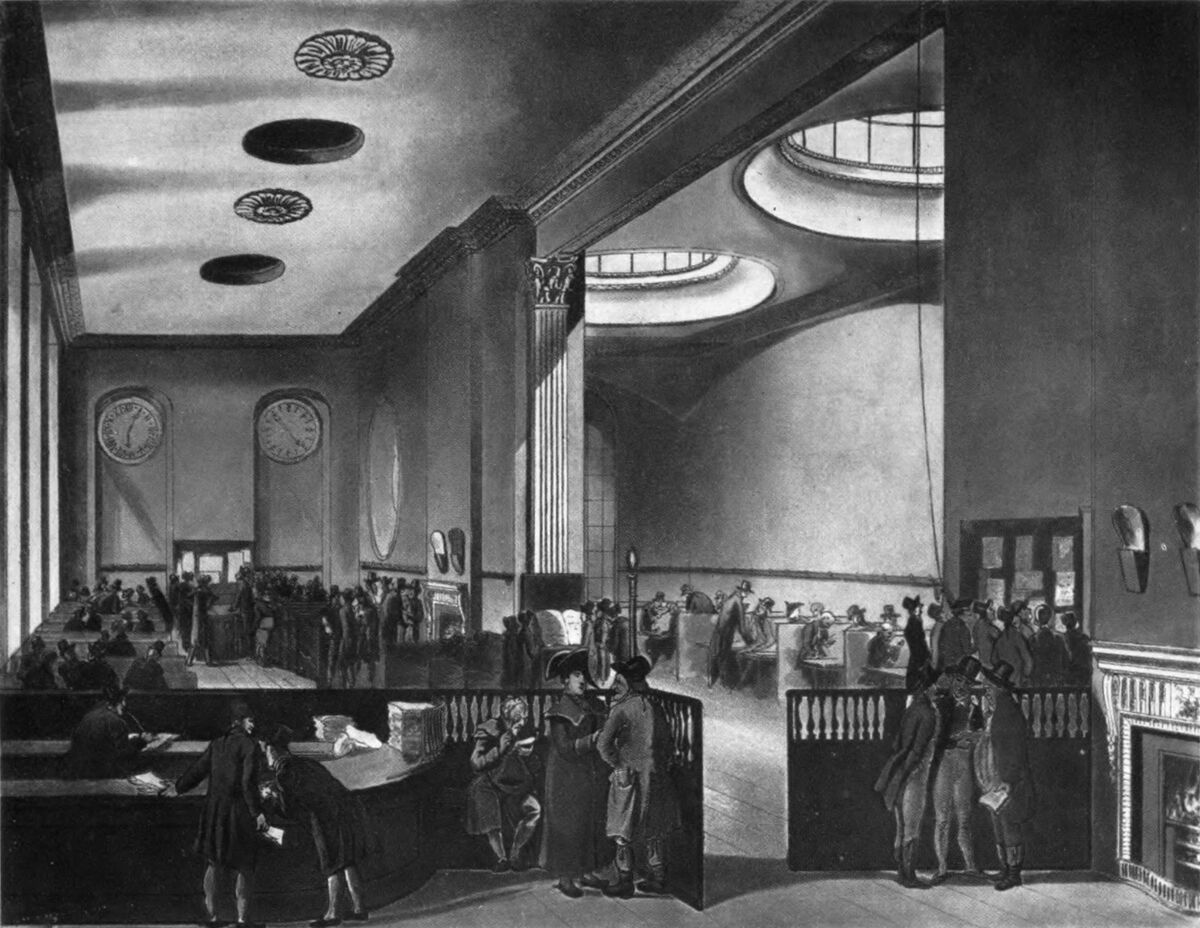
Hand-coloured print of the Subscription Room at Lloyd's, with merchants and underwriters at desks and talking in groups beneath tall windows and clocks
Thomas Rowlandson and Augustus Pugin, Lloyd's Subscription Room, from The Microcosm of London, 1809. Public domain.
Antiquity · London, 1688
General average, and Lloyd's

Roman law preserved a rule from the seafarers of Rhodes: when cargo had to be thrown overboard to save a ship in a storm, the owner's loss was made good by a contribution from everyone aboard, because it had been given for all.2 Shipping still runs on that rule, now called general average.

By 1688, at Edward Lloyd's coffee house on Tower Street in London, merchants had taken the next step. Instead of one backer carrying a whole voyage, many backers each took a slice of many voyages, writing their names under the risk; hence "underwriter". A single lost ship no longer ruined anyone, and the market that grew from that room still insures ships today.

The lesson for usSpread a risk across enough members and enough voyages, and a loss that would sink one merchant becomes a cost every member can carry.
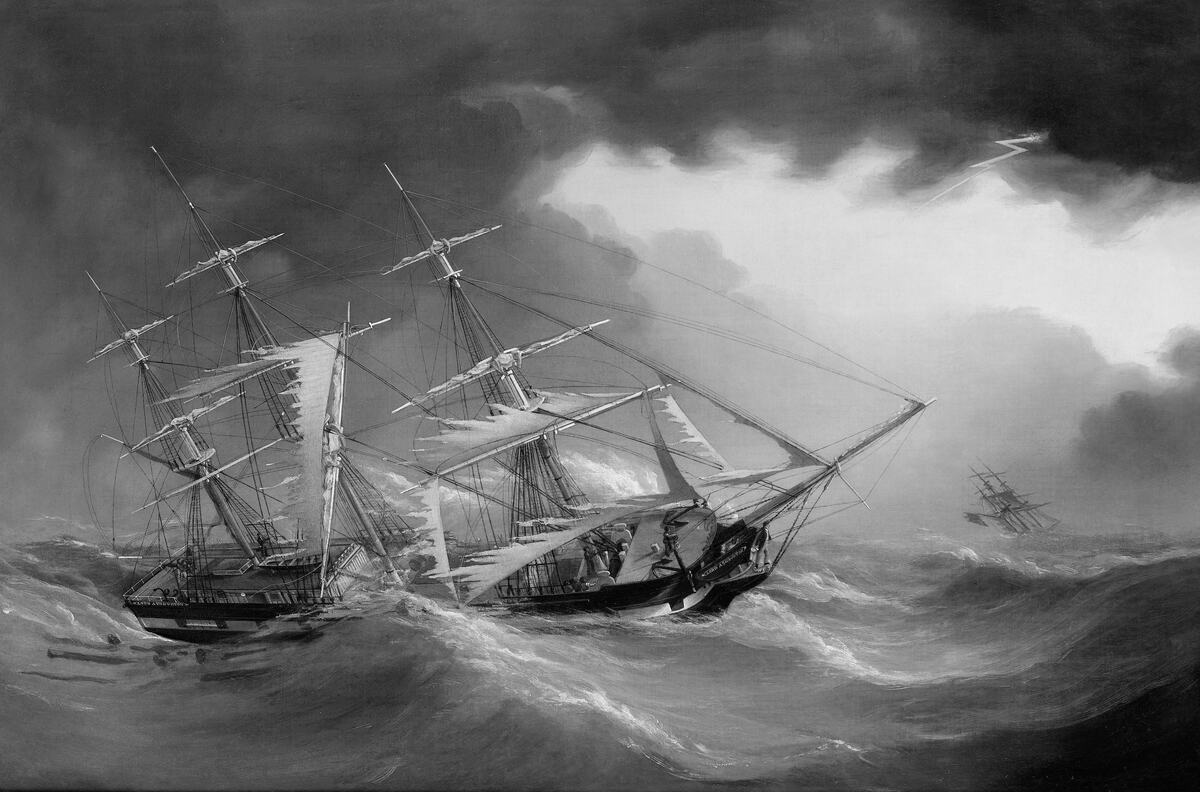
Oil painting of a full-rigged sailing ship with torn sails heeling in heavy seas under a dark storm sky
Joseph Heard, The Lord Ashburton being driven by the gale, c. 1857–59. Public domain.
1855 · Britain
Protection & indemnity clubs

By the 1850s British shipowners faced liabilities their marine policies excluded: injury and loss of life aboard, and damage their ships did to others in collisions. Rather than carry those risks alone, in 1855 owners began forming mutual protection associations and insuring each other.

The clubs belong to the shipowners they insure. More than a century and a half later, the clubs of the International Group cover about 90% of the world's ocean-going tonnage.3

The lesson for usWhen the market won't insure a risk, the people who carry it can, by pooling it among themselves. Nobody would write a founder an insurance policy; a mutual of founders, employees and GPs can.
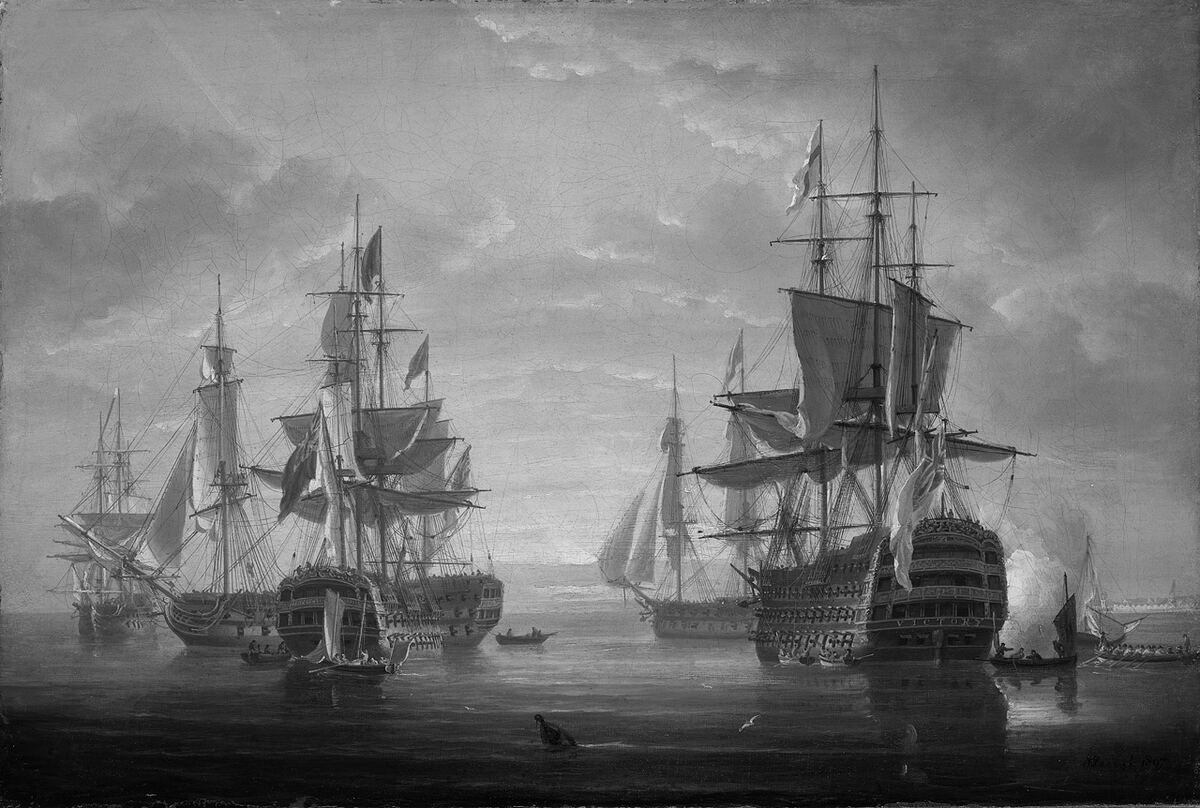
Oil painting of five British warships becalmed at anchor, sails hung out to dry, under a bright evening sky
Nicholas Pocock, Nelson's Flagships at Anchor, among them HMS Vanguard, Nelson's flagship at the Battle of the Nile and the ship Jack Bogle named his company after. Public domain.
1975 · United States
Jack Bogle, Vanguard, and the index fund

In his 1951 Princeton thesis, a young Jack Bogle, the future founder of Vanguard, which now has more than $13 trillion under management, concluded that actively managed mutual funds "can make no claim to superiority over the market averages." The research that followed bore him out: a landmark study of 115 funds from 1945 to 1964 found that, on average, they could not beat a simple buy-and-hold of the market, and after their fees, their investors did worse.4

In 1975 Bogle founded Vanguard on an unusual structure: the company is owned by its funds, and the funds by their investors, so there are no outside owners taking a profit. A year later it launched the first index fund for ordinary investors, which simply bought the S&P 500. Rivals called it "Bogle's Folly", and its first offering raised about $11 million. Half a century on, the evidence is in: over the 15 years to 2024, there was no category of US stock funds in which most active managers beat their benchmark.4

The lesson for usThe first three stories are about spreading risk. This one is about upside. Pooled, owned by its members and run for them, Vanguard's investors kept more of the market's return than most managers could earn for them. So they actually get better returns from the pooled structure. It's the same logic that makes our blended pool larger than the sum of its parts.
The Blend

Steadiness from the late stage. Upside from the seed stage.

Every member holds the same dividend share, one per $1M insured, and receives the same dividend per share. What differs is what each kind of member brings to the pool.

Seed founders · FMIP
The upside.
The pool receives the insured slice of every founder's exit proceeds, and the rare seed winner returns many hundreds (or even thousands) of times its insured face: enough to fund dividends to every member for decades. Explore the FMIP.
Employees · EMIP
Volume and steady premiums.
Employers pay premiums on schedule, Series B to E companies fail far less often than seed, and the pool's share of each exit brings larger proceeds home from more companies, sooner. Explore the EMIP.
GPs · GPMIP
Early, predictable cash.
Carried Interest in Series D+ and pre-IPO winners, valued at today's mark, mostly exits within one to five years and rarely fails, so it pays claims while the seed book matures. Explore the GPMIP.
The pool itself
Doubling down on its own members.
Each quarter, part of the pool's spare cash buys into members' companies that have survived three years, at their current valuation, the seed founders' companies included. The model assumes no stock-picking skill and no discount; in the Base Case that book returns a median of ~2.3×, and its gains flow into everyone's dividends.*
The Numbers

Less risk for the pool. And a bigger pool.

The same three books, modeled two ways: as three separate pools, and as one.*

Worst-case cash need
~2.9× less
Than the same three books run as separate pools, in a bad (1-in-20) path.
Per dollar insured
~4.6× less
Worst-case cash need than a pool of seed founders alone.
Loss ratio
~0.17
Claims against all inflows, for the whole blended pool.
Pool value, year 40
~36% more
Than the three pools run separately would hold between them.

Why the risk falls. The three books don't fail at the same time. Seed claims come early and in clusters; late-stage employees and GP carry fail less often and exit sooner, so their premiums and proceeds pay claims while the seed book matures. A seed-only pool has to hold cash against its worst years by itself. Blended, those years are cushioned by members whose good years come earlier.
Why the pool grows. With far less cash held back against its worst years, more of the pool's surplus can stay invested, including in its own members' companies, and compound. In the model's Base Case the blended pool ends year 40 about 36% larger than the three books would be run apart, and every member shares in it through the same dividend per share.

Every durable insurance institution began the same way: people facing a risk none of them could carry alone, agreeing to carry it together.
Three Ways In

One pool. Which is your way in?

Each company is underwritten on its own terms, then joins the same pool and shares the same dividend stream.

FMIP · Seed founders
Insure your own equity
A contractual payout if your startup fails, from a pool built to carry seed risk, and dividends drawn from every member's wins.
EMIP · Series B to E
Cover your team's equity
Cover up to 30% of each employee's equity: a contractual payout if the company fails, and dividends drawn from every member's wins, founders' and GPs' included.
GPMIP · Venture GPs
Insure a slice of your carry
Your dividend shares pay from the seed tail as well as late-stage exits, whether or not your carry ever pays.

Common questions.

Is it one pool or three?

One. The FMIP, EMIP and GPMIP are three ways into a single mutual pool, with one balance sheet and one class of dividend share. Every member holds one dividend share per $1M insured and receives the same dividend per share, whichever product they joined through.

How does blending help the pool?

It lowers the pool's risk and raises its long-run value. Run as one, the pool's worst-case cash need is about 2.9x smaller than the same three books run as separate pools, its loss ratio is about 0.17, and in the model it ends year 40 about 36% larger than the three would be combined. Every member shares in that through the same dividend per share.

Why does blending lower risk?

Because the risks don't arrive together. Seed claims come early and in clusters; late-stage employees and GP carry fail less often and exit sooner, so their premiums and proceeds pay claims while the seed book matures. Run as one, the pool's worst-case cash need is about 2.9x smaller than the same three books run as separate pools.

What does doubling down mean?

Each quarter, part of the pool's spare cash buys into members' companies that have survived three years, at their current valuation. Returns arrive when those companies exit and add to the dividends every member shares. The model assumes no stock-picking skill and no discount.

Is pooling like this new?

No. Mutual pools have made unaffordable risks affordable for centuries, from the general-average rule of ancient sea law to the Scottish Ministers' Widows' Fund of 1744 and the shipowners' P&I clubs of 1855. Vanguard, owned by its own funds' investors since 1975, showed that pooling can raise the upside as well as spread the risk. What's new is what we insure: startup equity and carried interest. The pool is in structuring; no insurance policy or security is offered yet.

The Bottom Line

Seed founders bring the upside; employees and GPs bring the steadiness. Pooled, the risk falls and the pool grows.

One mutual pool, three ways in.

* Illustrative and hypothetical. Not a forecast, guarantee, or offer. Figures are Base Case Monte-Carlo output from the Rising Tide pool model (200 paths, 40-year horizon), comparing the blended pool with the same three products run as separate pools, on default cohorts (founders and employees from 50 a quarter, growing 30% a year to 300 a quarter; GPs from 5 a quarter, growing 20% a year to 30 a quarter). The EMIP book is modeled as a forward on the covered slice of each employee's equity. Worst-case cash need is the largest cumulative cash shortfall the pool must fund to pay claims on time, at the 95th percentile of paths; "per dollar insured" divides it by the face in force. Loss ratio is claims against all inflows. Pool value is median net asset value at year 40. The double-down book assumes no selection skill and no entry discount. Model verified 23 October 2026.

1 Robert Wallace and Alexander Webster, with Colin Maclaurin, established the fund for the widows and children of Church of Scotland ministers by Act of Parliament in 1744 (the Act is dated 1743 in some sources). The forecast of £58,348 against actual capital of £58,347 in 1765 is as told in Yuval Noah Harari, Sapiens (2014); secondary accounts vary slightly. The fund's published history runs from 1743 to 1993.

2 Digest of Justinian 14.2.1 (Paulus), on the Lex Rhodia de iactu. General average is codified today in the York-Antwerp Rules. Lloyd's: first recorded mention of Edward Lloyd's coffee house, London Gazette, 1688.

3 The first protection associations were formed in Britain in 1855, covering liabilities such as loss of life, personal injury and collision damage that hull policies excluded. Tonnage share per the International Group of P&I Clubs.

4 John C. Bogle, Princeton senior thesis (1951), as quoted in The Daily Princetonian. Michael C. Jensen, "The Performance of Mutual Funds in the Period 1945–1964," Journal of Finance (1968). Vanguard began operations on 1 May 1975 and is owned by its US funds, which are owned by their investors; First Index Investment Trust, now the Vanguard 500 Index Fund, launched on 31 August 1976. Vanguard managed more than $13.3 trillion in US mutual fund and ETF assets as of 30 June 2026. Active-manager results per S&P Dow Jones Indices, SPIVA U.S. Year-End 2024 scorecard, 15 years to December 2024.

5 The FMIP, EMIP and GPMIP are in structuring as a single mutual pool. No insurance policy or security is offered hereby, and no regulatory approval has been sought or obtained. Dividends are discretionary, paid only from pool surplus, and are not fixed obligations; payouts, dividends, and pool values are model outputs and targets, not promises. Rising Tide Management LLP.